We have hosted guests in Venice's Castello district for over three years. Most arrive with a standard tourist itinerary and leave with a completely different understanding of the city. This is what we tell every guest who asks.
Why Stay in Castello, Not San Marco
Both our Venice apartments are in Castello — the neighbourhood that begins just east of Piazza San Marco and stretches towards the Biennale Arsenale. The tourist maps make San Marco look central, and it is. But staying directly on San Marco means hotel prices, tourist noise until midnight, and the sense of being in a theme park rather than a city.
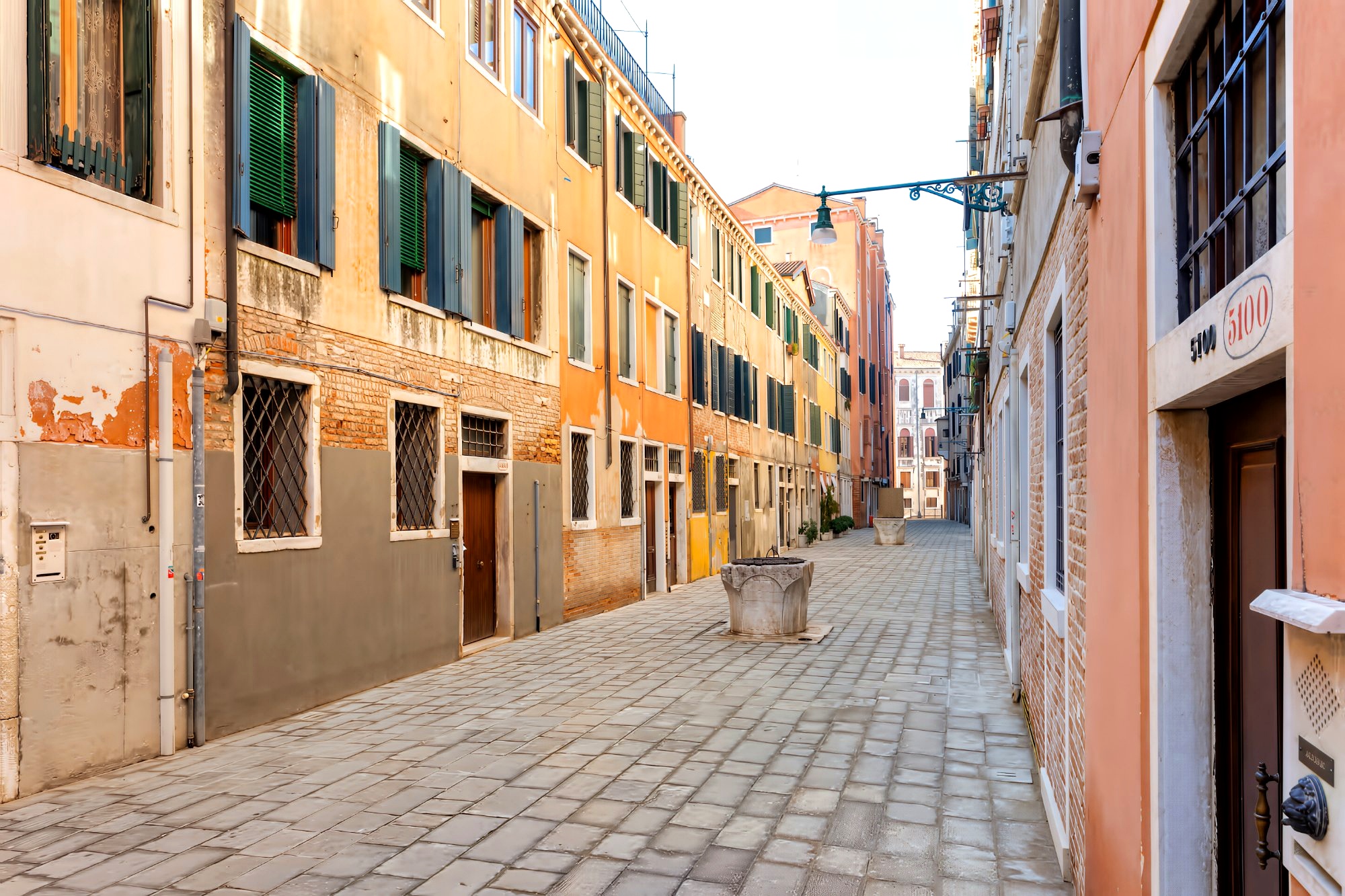
Castello is three minutes further. The streets are quieter. There are morning markets, neighbourhood bakeries, and families who have lived here for generations. You are still 3–10 minutes from everywhere that matters — but you are living in the real Venice. Our apartments are also in a "dry zone" — safe from the acqua alta flooding that affects the lower-lying sestieri.
Acqua Alta — What It Is and How to Avoid It
Acqua alta (high tide) is the seasonal flooding that raises the water level in parts of Venice, typically in November through February. It is manageable and does not close the city — most residents simply put on rubber boots and carry on. However, it is worth knowing that not all of Venice floods equally.
- The area around Piazza San Marco floods first and most severely — the Square sits at the lowest point of the city
- Our apartments in Castello are in a dry zone — the streets here sit higher and do not flood even during significant acqua alta events
- The MOSE barrier system, completed in 2020, now protects Venice from the most severe flooding — it is activated during forecast events
- If acqua alta is forecast during your stay, we will inform you and advise routes — it is never dangerous, just occasionally soggy near San Marco
Getting from the Airport
Marco Polo Airport is approximately 30–40 minutes from central Venice by water or road. These are your options, in order of our preference:
- Alilaguna water bus: Departs from the airport dock. Line A (Orange) stops at San Zaccaria, 2 minutes walk from our apartments. Takes 55–75 minutes.
- Private water taxi: Drops you directly at the entrance to your apartment's calle. 35–40 minutes. Worth splitting with other guests. We can provide water taxi contacts — ask when you book direct.
- Bus + Vaporetto: ACTV bus to Piazzale Roma, then vaporetto. Cheapest option, takes 60–80 minutes. Fine for light luggage, exhausting with heavy bags.
- Avoid: Airport transfer companies with minibuses to Piazzale Roma. They are slow and drop you where the bus would.
Our Favourite Bacari & Restaurants
A bacaro is a Venetian wine bar serving cicchetti — small bites, roughly equivalent to Spanish tapas. The bacaro crawl is the authentic Venetian way to eat and drink. These are our personal favourites, all within easy reach of our apartments:
- Magna Bevi Tasi — literally around the corner from our apartments. Authentic, unpretentious, and exactly the kind of place tourists never find. Our top recommendation for a first evening.
- Rosa Salva — a Venetian institution for breakfast. Two locations: near Piazza San Marco and near Santi Giovanni e Paolo. Exceptional pastries and coffee, long-standing quality.
- 6342 A Le Tole Spaghetteria Pizzeria — Barbaria de le Tole 6342, Castello. Excellent pasta and pizza in a relaxed neighbourhood setting. Good value, no fuss, reliably good.
- Osteria Al Cantinon — a proper neighbourhood osteria for lunch or dinner. Solid Venetian cooking, local crowd, honest prices.
- Osteria Da Mamo — relaxed and welcoming, with good seafood pasta and a pleasant atmosphere. Ask for today's specials.
- Osteria Al Mascaron (Calle Lunga Santa Maria Formosa) — packed, chaotic, and completely honest. The pasta with crab is essential.
- Ask us on arrival for current recommendations — our favourites evolve seasonally.
Getting Around Venice — The Vaporetto
Venice has no cars. Getting around means walking or taking the vaporetto — the public water bus network. It sounds exotic but it works like any urban transit system. A few things worth knowing:
- Line 1 stops everywhere along the Grand Canal — the scenic tourist route. Slow but beautiful. Good for your first day.
- Line 2 is faster and more direct. Most useful for getting to the train station or Piazzale Roma from Castello.
- The nearest stop to our apartments is San Zaccaria — two minutes on foot. Direct Alilaguna connections to Marco Polo Airport run from here.
- Actv day passes are available at vaporetto stops and the Actv app. If you plan to use the vaporetto more than twice in a day, a day pass is cheaper. Single tickets expire 75 minutes after first use.
- Walking is almost always faster within Castello and to San Marco. Use the vaporetto for longer distances: Rialto, Santa Lucia station, the Jewish Ghetto, or the islands (Murano, Burano, Torcello).
Five Things Only Locals Know
- Walk east, not west. Every tourist walks west from San Marco towards Rialto. Walk east into Castello and you will have the streets almost to yourself within five minutes.
- The morning Rialto market opens at 7:30am and closes by noon. The fish market in particular. Arrive before 9am for the best produce and no crowds.
- Gondola singing. You do not need to be on a gondola to hear it. Stand on any bridge near the San Marco area at dusk — the sound carries beautifully across the water for free.
- Vaporetto Line 1 vs Line 2. Line 1 stops everywhere along the Grand Canal — the tourist line. Line 2 is faster and direct. Know which one you need before you queue.
- Venice in the rain is extraordinary. Most tourists retreat indoors. The streets empty, the reflections multiply, and the city looks exactly as it did for five hundred years. Pack a good umbrella.
Ready to Stay?
Book Direct and Experience Venice Properly